

Cultural artworks to welcome visitors on a journey of discovery
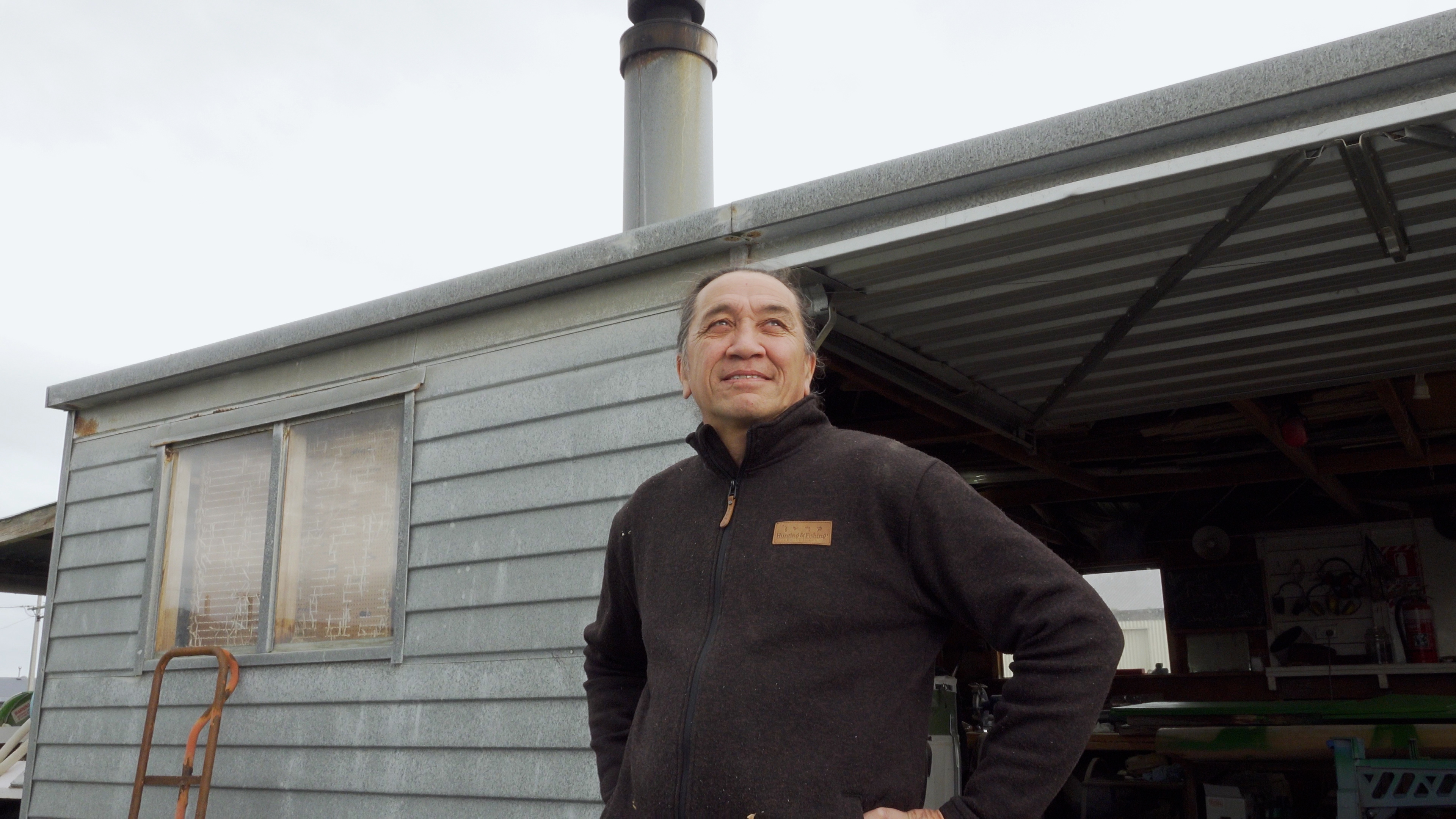
Artist James York at his Riverton studio.
Cultural narrative artworks set to adorn Southland’s new regional museum will invite manuhiri (visitors) to embark on a journey of discovery through the stories, people, and places of Murihiku.
Woven both inside and out at Te Unua Museum of Southland, whakairo (traditional Māori carving) designed by local artist James York (Kāi Tahu, Kāti Māmoe, Waitaha, Ngā Puhi) would play a vital role in ensuring Kāi Tahu pūrākau (stories), culture, and identity was visible at the new museum in Invercargill.
Since his interest in whakairo was ignited while doing a course at Murihiku Marae in the 1980s, York had since gone on to study at the country’s premier traditional art school, the New Zealand Māori Arts and Crafts Institute in Rotorua.
The narrative at Te Unua would conceptualise the story of Tamarereti and his journey in search of Tahu-nui-ā-Raki (the Aurora Australis).
“It’s all about a journey of discovery: chasing something that you might not necessarily attain, but you’re still going to go through that learning process. It’s about being brave enough to take those steps – it’s all about navigation, and the sea, land, and stars,” York said.
“To me personally, going into a museum is about discovery. It’s about looking at your past, and realising why things might be the way they are, but it’s also a place of discovery of what could be in the future as well. It’s about searching for knowledge – just trying to fill up your kete of knowledge.”
York’s cultural narrative had been developed in partnership with the four papatipu rūnaka ki Murihiku – Waihōpai, Awarua, Hokonui, and Ōraka-Aparima.
He hoped all manuhiri would not only gain a richer understanding of the stories of mana whenua – but be inspired by them as well.
“To me it’s really important to give these stories life again, and tell these stories so they’re remembered,” he said.
“It’s a visual landmark for our people to be proud of. I can only hope that it will inspire people. I think to see such a cultural element be shown, quite proudly, in the museum is a major step forward for our region, and I hope it will bring people together.”
The visible presence of cultural narratives on the landscape helped connect people to the whenua, and the opportunity to craft artworks that would have a permanent place in the fabric of Southland’s new regional museum was a privilege, he said.
Among the most striking architectural elements of the new museum was the enormous double-hulled waka that would sit above the central foyer connecting the western exhibition galleries to the eastern building, home to the museum’s café, retail, and education spaces.
With a foundation of structural steel, Trespa, and local sustainably-sourced beech, it would also be adorned with a design to tell the story of the voyage to find the source of the darting lights, which Māori had observed and puzzled over for generations.
Tamarereti had taken up the challenge, alongside a 70-strong crew and two tohuka (priests or experts), setting sail southward on the mighty waka Te Rua O Maahu.
The narrative of the voyage through the icy waters of the Southern Ocean – Te Tai Uka a Pia – to unlock the secrets of Tahu-nui-ā-Raki would continue around the building.
Window fins on the northern side of the building would represent the papatipu rūnaka ki Murihiku, and would depict the moving tides and currents of the moana. A matakupeka (net) motif would also be featured, representing the plentiful bounty of resources found within the takiwā, York said.
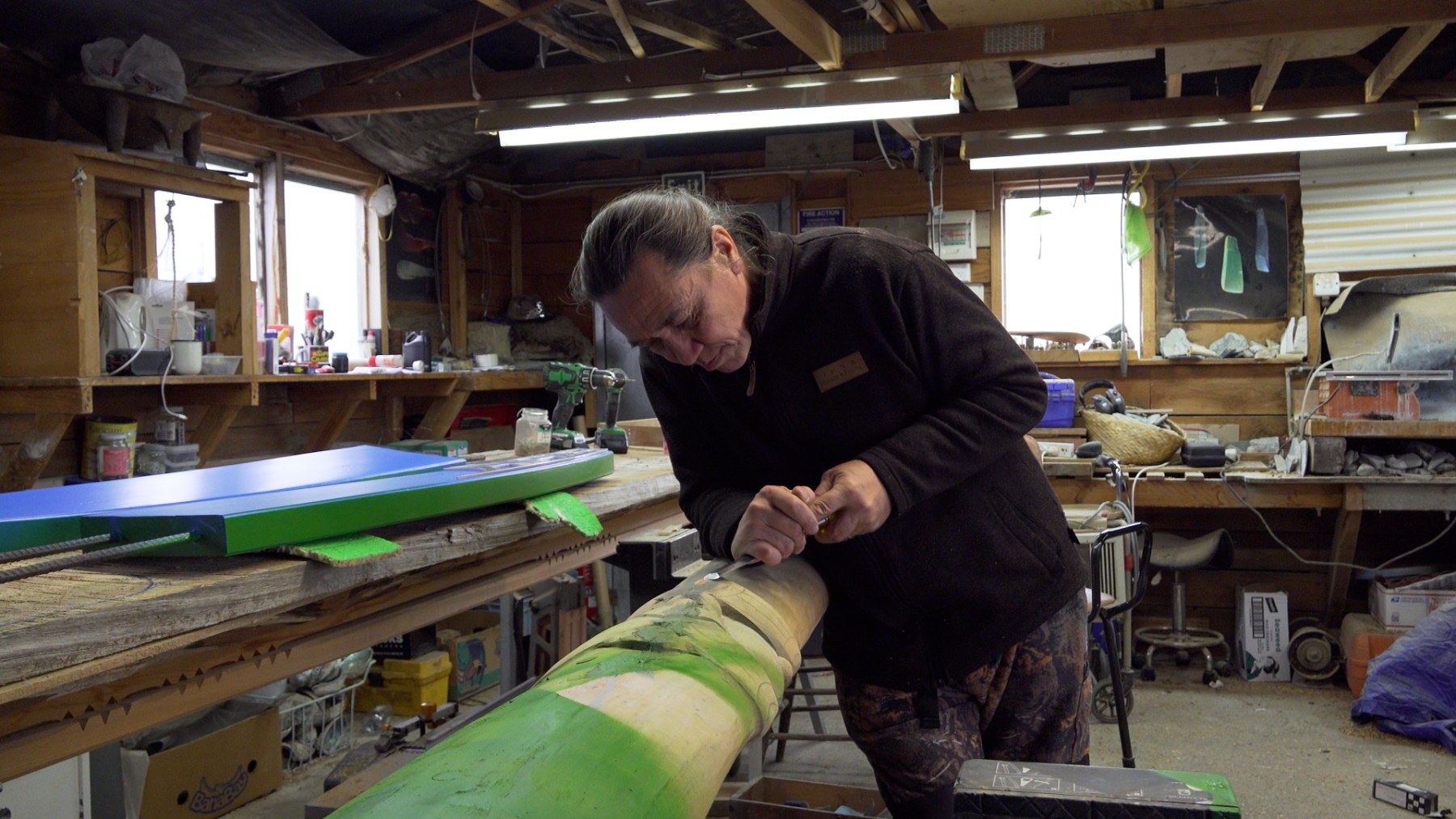
Cultural narratives crafted by artist James York will form an integral part of Te Unua Museum of Southland, inside and out.
Outside, meanwhile, two puka stones – one that, in its raw form, weighed more than five tonnes – would be sculpted to metaphorically anchor each end of the waka, while a single, two-storey-high pouwhenua, representing a hoe (paddle), would be found at the exterior of the eastern building. The pou would also draw manuhiri towards the elevated outdoor terrace of the mezzanine.
Overlooking the award-winning Queens Park, the mezzanine’s brick paving would include a cultural map design, with two main waypoints – the Tākitimu Mauka (mountains) and Ruapuke Island, a stronghold of southern Māori and a site of the signing of Te Tiriti o Waitangi in June 1840.
Te Unua Museum of Southland Director Eloise Wallace said York had brought a wealth of creative leadership to developing the cultural narrative embodied by the regional museum.
“We are incredibly grateful to James and the papatipu rūnaka ki Murihiku for sharing their whakaaro and artistic vision with the Southland community,” she said.
“The narrative woven into the fabric of Te Unua is so rich, and will have an incredibly enduring impact on defining the aspirations, stories, and values of our regional museum. Each element is hugely meaningful and reflects our connection to the stories and places of our shared history, as well as the future we hope to reach together,” she said.
“We know our community will feel an immense sense of collective pride every time they reflect on what has been created for them.”
York’s mahi had been supported by the Murihiku Rūnaka and Rio Tinto NZAS Community Development Fund. It contributed $100,000, earmarked for the completion of the double-hulled waka.
Among York’s work already peppered throughout southern landscapes were the Matariki pou found throughout the Southland district – created alongside fellow toi Māori artist Keri Whaitiri, mahi toi (cultural artwork) adorning the Stead St Pump Station near Ōtātara, and three pouwhenua found on the secluded island of Whenua Hou, off the north-west coast of Rakiura Stewart Island.
Meanwhile, further afield, York was one of the first toi Māori artists involved in creating carvings now found at Scott Base: New Zealand’s headquarters on the ice at Antarctica.
