​ ​ ​ ​ ​ ​ Skip to main content

Fishing stories explored through regional museum collection

Date:
Categories:
News
Regional museum collections
Exhibitions

More than 1800 matau (traditional Māori fish hooks) gathered across generations have been the subject of renewed focus recently, with the Te Unua Museum of Southland Collections team assessing objects as part of the planning for the new regional museum’s long-term exhibition.

With the physical build of Te Unua Museum of Southland, in Invercargill, set to be completed soon, work to bring the exhibitions that would be on display when the new museum opens to the public next year is continuing.

Te Unua Museum of Southland Collections Team Leader Tiffany Jenks said the taoka Māori selected for inclusion in the long-term exhibition at the museum would be part of a wider exploration of the narratives behind Southland’s rich fishing heritage.

During the past month, the Collections team had been carefully working through the extensive collection of matau – largely made from bone – to identify the objects best-placed to help tell the fuller story of the region’s fishing traditions, and their place in Southland’s broader historical narrative.

“The selection process is about finding objects that help visitors with the places and practices behind them. Our regional museum collection has such an extensive array of hooks, which really illustrates the importance of our waterways to Southland,” she said.

“No two hooks are the same – they all vary in size, design, and condition – and they really offer a glimpse into the ingenuity of early fishing practices within our region. Some of these hooks are absolutely beautiful, particularly the ones with pāua inlay, and you can really appreciate the craftsmanship that has gone into them. We also wanted to find examples that people could look at and recognise, so they can start to understand how they were used, and make that connection with the past.”

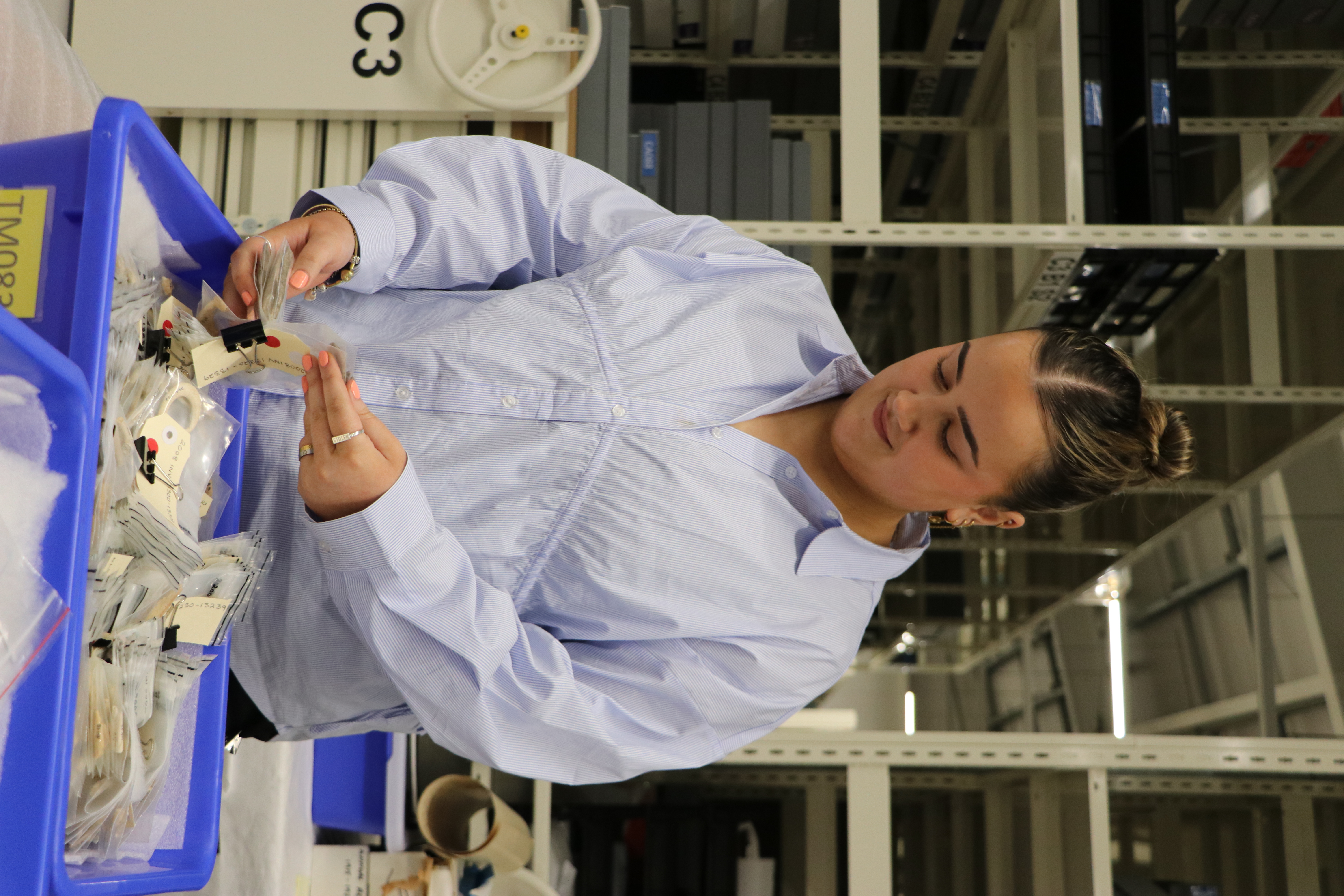
Te Unua Museum of Southland Kaitiaki Mana Taoka Tyra Ryan, with some of the fish hooks found within Southland’s regional heritage collection, Te Kupeka Tiaki Taoka.

Kaitiaki Mana Taoka Tyra Ryan had played a key role in narrowing narrowed down the matau, to a selection of about a dozen for display.

Provenance had been an important consideration as the team worked to determine which hooks to highlight within the long-term exhibition.

“Knowing where an object comes from can add another layer to its story. If a visitor sees a place name they recognise, or a location that has special meaning for them, it makes that object feel much closer to home. These hooks are a part of the wider story of how Southlanders of generations past lived, worked, and connected with the natural environment around them,” Ryan said.

“Fishing has been such an important part of life in our community for generations. It is particularly significant within Māori communities here in Southland, and knowledge of the moana, traditional materials, and techniques have been passed down from one generation to the next. This collection provides us with an opportunity to explore our shared history, and the ways fishing has shaped lives and livelihoods across our region.”

Materials and technology may have changed, but practices had largely remained the same, Ryan said.

Alongside selecting the objects for exhibition, the team had also improved the way the wider collection of fish hooks was stored and documented, making it easier to locate while ensuring they were protected for the future, she said.

The hooks had been carefully repacked into a more structured storage system, using different conservation materials to provide extra support and minimise movement of the delicate objects. Records had also been reviewed and updated, including measurements and photographs, to ensure information about each object was as accurate as possible.

Carrying out this work had made the hooks easier to find and easier to work with, as well as ensuring they were better protected. That meant they were more accessible for the museum and heritages services team, as well as members of the community who may wish to undertake research in the future.

Share this page

Sharing...